
search

 2026-03-21
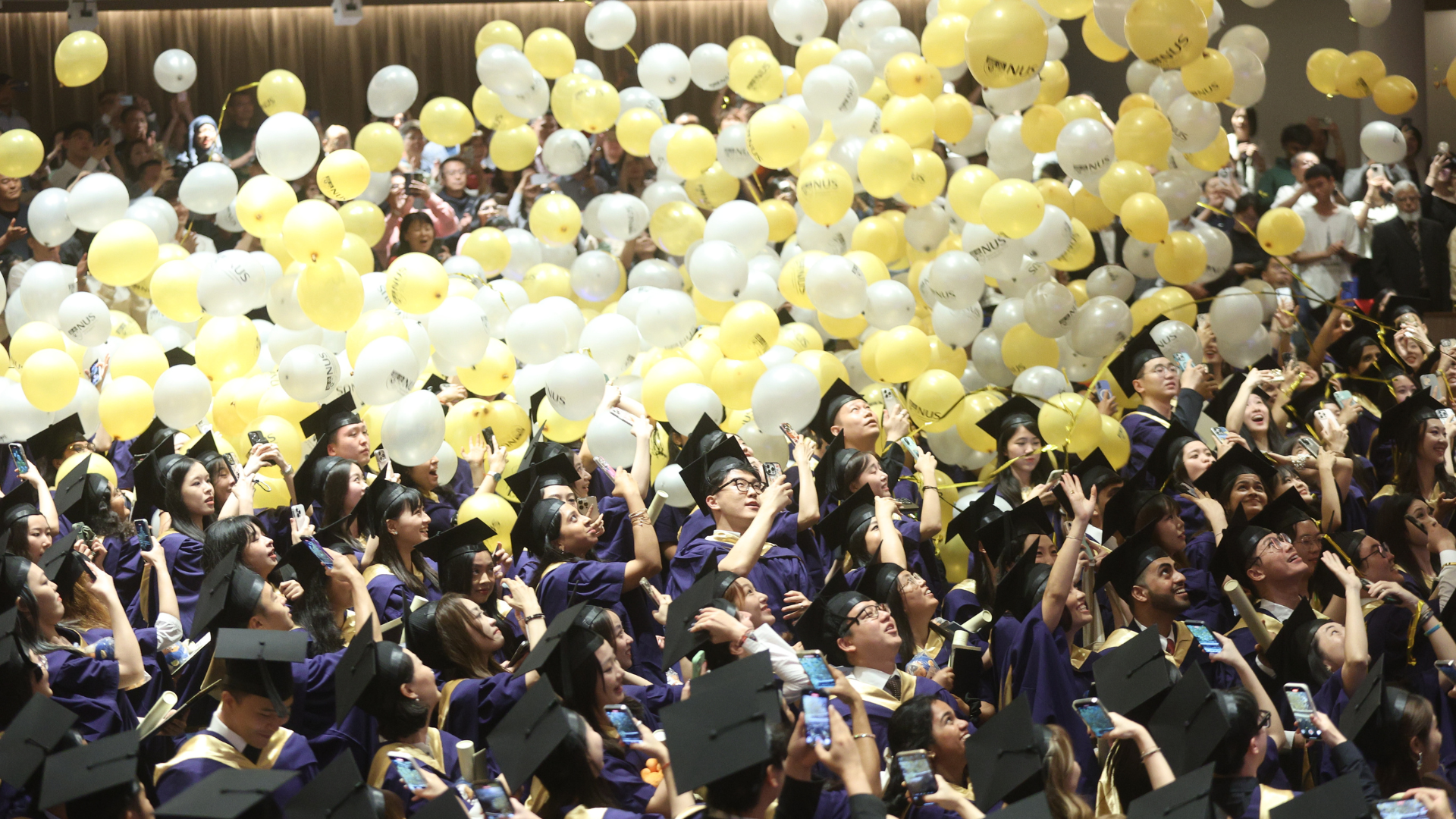 NUS graduates continued to earn higher starting salaries and achieve strong employment rates, according to results of the Joint Autonomous Universities Graduate Employment Survey 2025.
· Higher or similarly strong starting salaries for graduates from 20 courses1
· Steady rise in mean starting salaries for Arts and Social Sciences, Business, Design and Engineering, and Nursing graduates over the past three years
· More than nine in 10 graduates across 18 degree programmes1 secured employment within six months
Graduates of the National University of Singapore (NUS) continue to earn high starting salaries and secure employment in 2025, according to the Joint Autonomous Universities Graduate Employment Survey (JAUGES) 2025, jointly conducted by NUS and other Autonomous Universities.
Professor Aaron Thean, NUS Deputy President (Academic Affairs) and Provost, said, “We are immensely proud that our NUS graduates continue to demonstrate exceptional resilience and secure strong career starts, even amidst today's cautious job market. The latest graduate employment survey results affirm this, showcasing their strong employability and competitive placements across various sectors.”
“In an increasingly AI-pervasive world, where industries are rapidly transforming through global shifts and accelerating innovation, NUS remains committed to nurturing graduates who are not only academically excellent but also highly adaptable, resilient, and equipped with future-ready skills. The human elements of incisive sense-making, critical judgement, and astute decision-making remain paramount. Our alumni are well-prepared to embrace new challenges, drive progress, and lead in an ever-evolving professional landscape," Prof Thean added.
About nine in ten NUS fresh graduates in the labour force secured employment within six months after final exams
Among NUS fresh graduates in the labour force, 89.8 per cent secured employment within six months of completing their final exams. 75.2 per cent of NUS fresh graduates were in full-time permanent employment2 during the survey period. Another 6.5 per cent of NUS fresh graduates in the labour force have either accepted a job offer and are pending commencement of duty, or are actively starting a business venture.
More than nine in 10 fresh NUS graduates across 18 degree programmes3 secured employment within six months of completing their final exams. The list of these courses can be found in Annexe A. A number of undergraduate programmes delivered strong employment outcomes. 100 per cent of Dentistry and Architecture graduates, and 95 per cent of Business Administration graduates secured employment.
96.2 per cent of graduates from Civil Engineering secured employment within six months of completing their final exams.
NUS graduates in full-time permanent employment earned higher starting salaries
The survey also revealed that the mean gross monthly salary of NUS fresh graduates in full-time permanent employment was S$5,193 in 2025, an increase from S$5,101 in 2024.
The median gross monthly salary of fresh graduates from NUS in full-time permanent employment also increased to S$4,746 in 2025, an increase from S$4,600 in 2024.
Graduates from 20 courses3 in Arts and Social Sciences, Business, Computing, Dentistry, Design and Engineering, Nursing, and Science have either secured higher or maintained similarly strong starting salaries compared to graduates the year before. Please refer to Annexe B for the list of courses in which graduates have achieved higher or similarly high starting salaries compared to 2024.
In particular, median starting salaries for graduates from Arts and Social Sciences, Business, Design and Engineering, and Nursing have risen continuously over the past three years.
5,159 out of a total of 7,567 fresh NUS graduates from the Class of 2025, and 169 out of 577 follow-up4 NUS graduates, participated in the joint survey.
Amidst a cautious job market, the NUS Centre for Future-ready Graduates (CFG) provides continuous career support for students and remains a resource for alumni who may wish to tap on these services as their careers evolve. Through refined coaching and practical workshops, CFG addresses evolving industry needs, utilising scalable models like group coaching to ensure broad access to expert guidance, ultimately fostering successful career exploration, enhanced employability, and positive employment outcomes for NUS graduates.
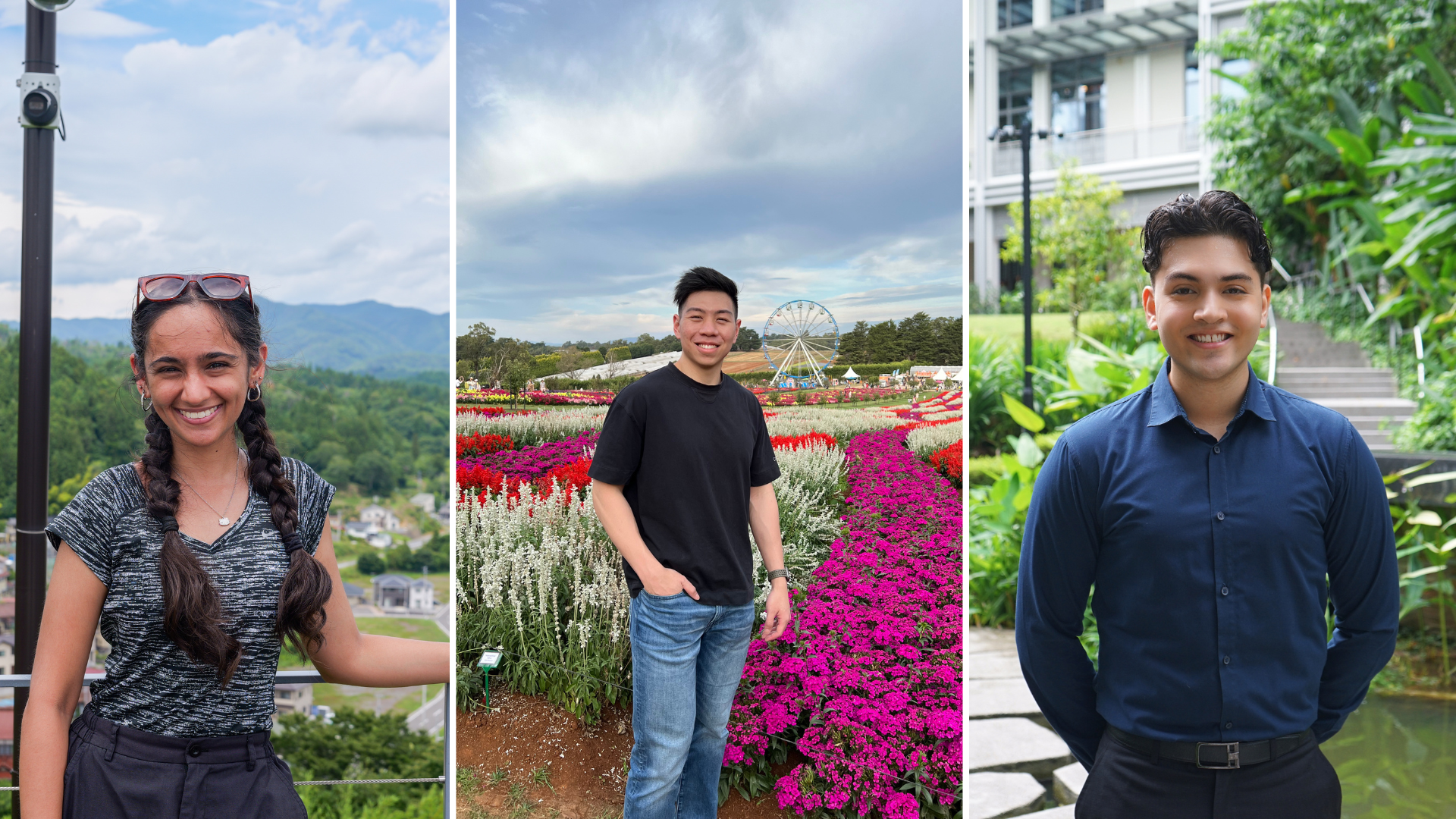 NUS alumna Radhakrishnan Srivarshini (first from left) from the College of Design and Engineering at NUS leverages her training and skills to infuse a stronger design- and planning-centric perspective in her role as a Graduate Transport Planner. Daniel Tan (middle) from NUS Computing built a strong foundation as a software engineer through his double degree in Business Analytics and Economics. Ethan Vinesh Naidu (third from left) honed his ability to interpret global developments and received comprehensive support during his time at NUS, which prepared him for his current role as an associate.
Forging remarkable paths in today’s dynamic workforce
Driven by a keen curiosity about the social and environmental aspects of space, Radhakrishnan Srivarshini is a Graduate Transport Planner in the Cities, Planning and Design department of Arup Singapore Pte Ltd, a global firm which provides design, engineering, architecture, planning and consulting services across various sectors. She leverages her landscape architecture training and the skills honed at NUS to infuse a stronger design- and planning-centric perspective into a field traditionally dominated by engineering.
Throughout her undergraduate studies, Srivarshini immersed herself in diverse design projects that significantly deepened her interest in the built environment. In her "From Farm to Fork" project in Queenstown, she reimagined a hawker centre as a collaborative cooking space, emphasising user engagement and inclusive design to foster community interaction among elderly residents. Beyond the design studio, she pursued applied learning through initiatives like the Senior Learning Experience at Tembusu College, where she collaborated with the Urban Redevelopment Authority to co-develop a framework for evaluating public spaces and explored how design influences public experience. “My experience in research, design, and innovation has shown me that good design begins with listening. Whether it is in a hawker centre or along a transport corridor, I believe spaces must serve people – and to create meaningful solutions, we must first understand their stories,” said Srivarshini.
An NUS Merit Scholar and valedictorian of the Business Analytics programme, Daniel Tan Wei Hao built a strong academic and leadership foundation through his double degree in Business Analytics and Economics. This rigorous preparation culminated in his current role as a Software Engineer at Morgan Stanley, where he develops and enhances financial systems crucial for trading operations, ensuring their performance, scalability, and adherence to regulatory requirements.
His path to this role was significantly shaped by a rewarding 10-week summer internship in 2023 at Morgan Stanley. During this intensive period, Daniel engaged in multiple technical projects, training, and networking, gaining invaluable exposure to building robust systems within a highly regulated financial environment where performance, reliability, and compliance are paramount. His exceptional performance throughout the internship was continuously assessed, leading directly to a full-time offer even before his graduation. Reflecting on this pivotal experience, Daniel stated, "I was entrusted with multiple projects, which put me under significant time pressure to deliver meaningful results for my final presentation. Despite the intensity, I thoroughly enjoyed my internship as it gave me a better understanding of the business and what a full-time role in the firm would entail."
Ethan Vinesh Naidu is an Associate at the Monetary Authority of Singapore, where he supports efforts to grow Singapore’s financial sector and strengthen Singapore’s position as a trusted and leading global financial hub. His time at NUS proved formative, shaping both Ethan’s technical foundation and professional judgment. His rigorous training as a Political Science major, complemented by his minor in Economics, honed his ability to interpret global developments and grasp policy rationales. This interdisciplinary approach directly informs his analysis of macro trends and his identification of market opportunities, providing him with invaluable contextual thinking and analytical frameworks for professional discussions.
Ethan attributes his successful career trajectory to the University’s comprehensive institutional support, especially the targeted career guidance from the Centre for Future Ready Graduates (CFG) and the personalised mentorship received through the Faculty of Arts and Social Sciences Mentorship Programme. Ethan added, “The CFG staff took the time to understand every detail of my resume. Their immediate feedback and willingness to share their experience made a real difference in my job search.” This holistic support, combined with his academic rigor and experiential learning, significantly shaped his confidence, adaptability, and strategic approach to his professional life.
MORE ON THIS TOPIC
Navigating the evolving job market: NUS graduates excel with strong capabilities and diverse skills
---
1Includes course(s) with sample size smaller than 30 or a response rate less than 70%.
2Full-time permanent employment refers to the number of graduates working on a full-time permanent basis, as a proportion of graduates in the labour force (i.e. those who were working, or not working but actively looking and available for a job).
3Includes course(s) with sample size smaller than 30 or a response rate less than 70%.
4Follow-up graduates refer to Architecture graduates from the Class of 2022/2023, who were surveyed either three years after obtaining their Bachelor of Architecture, or two years after completing their Master of Architecture (for those who pursued it). They also include Medicine and Pharmacy graduates from the Class of 2024, who were surveyed one year after graduation. This extended survey timeline allows all these graduates to complete essential practical training, such as pupillage, housemanship, first-year residency, or pre-registration training.
News from: https://news.nus.edu.sg/nus-graduates-demonstrate-resilience-in-a-cautious-job-market/