Innovation for impact: NUS graduates launch tech start-ups to solve real-world problems
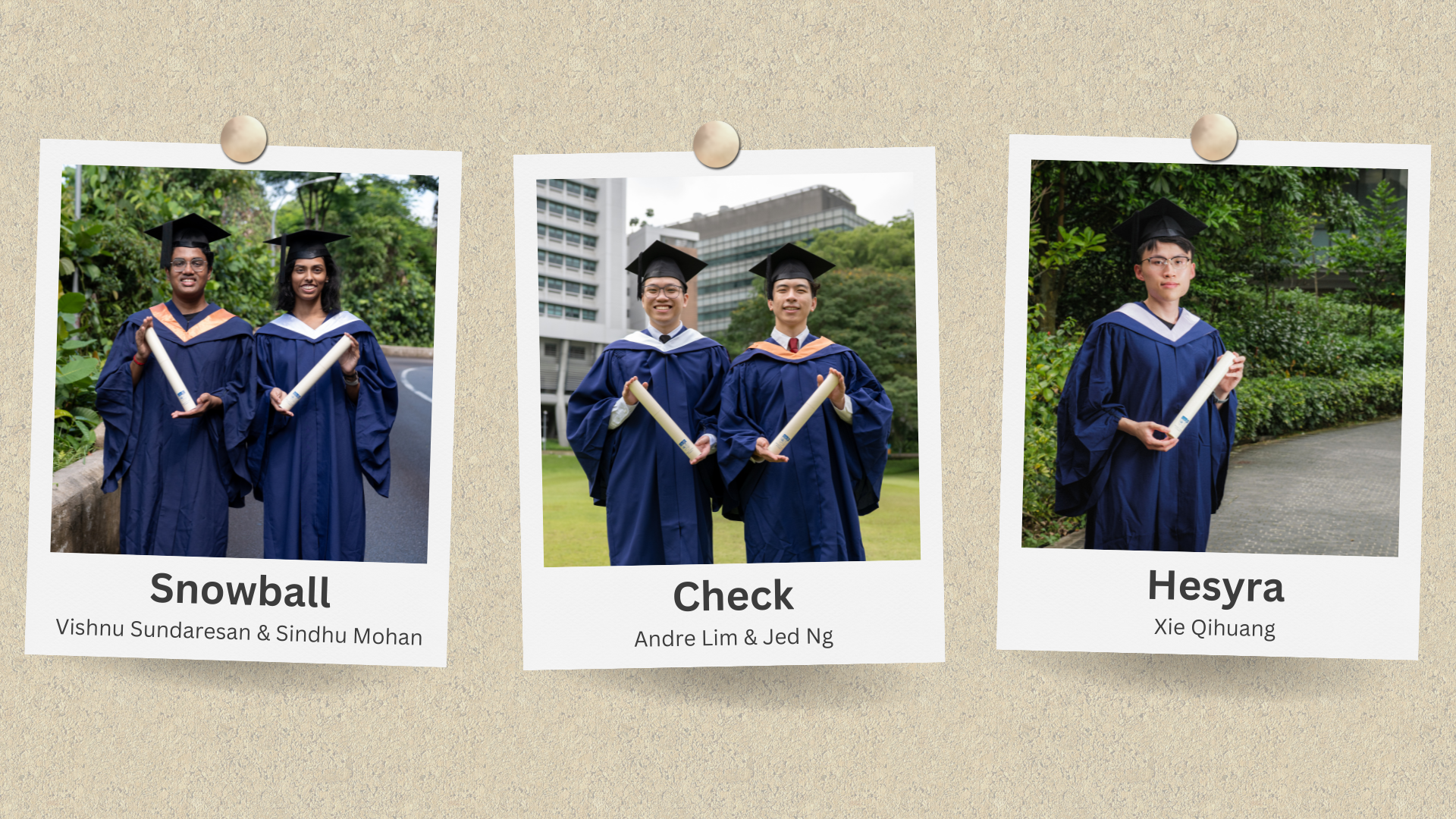 Start-ups by NUS graduates from the Class of 2025, from left to right: Co-founders of Snowball, Vishnu Sundaresan and Sindhu Mohan; co-founders of Check, Andre Lim and Jed Ng; and founder of Hesyra, Xie Qihuang.
Entrepreneurship is a risky business, even for those with extensive experience and ample connections. These five enterprising graduates from the NUS Class of 2025 have combined innovation and perseverance to take their tech start-ups to the next level.
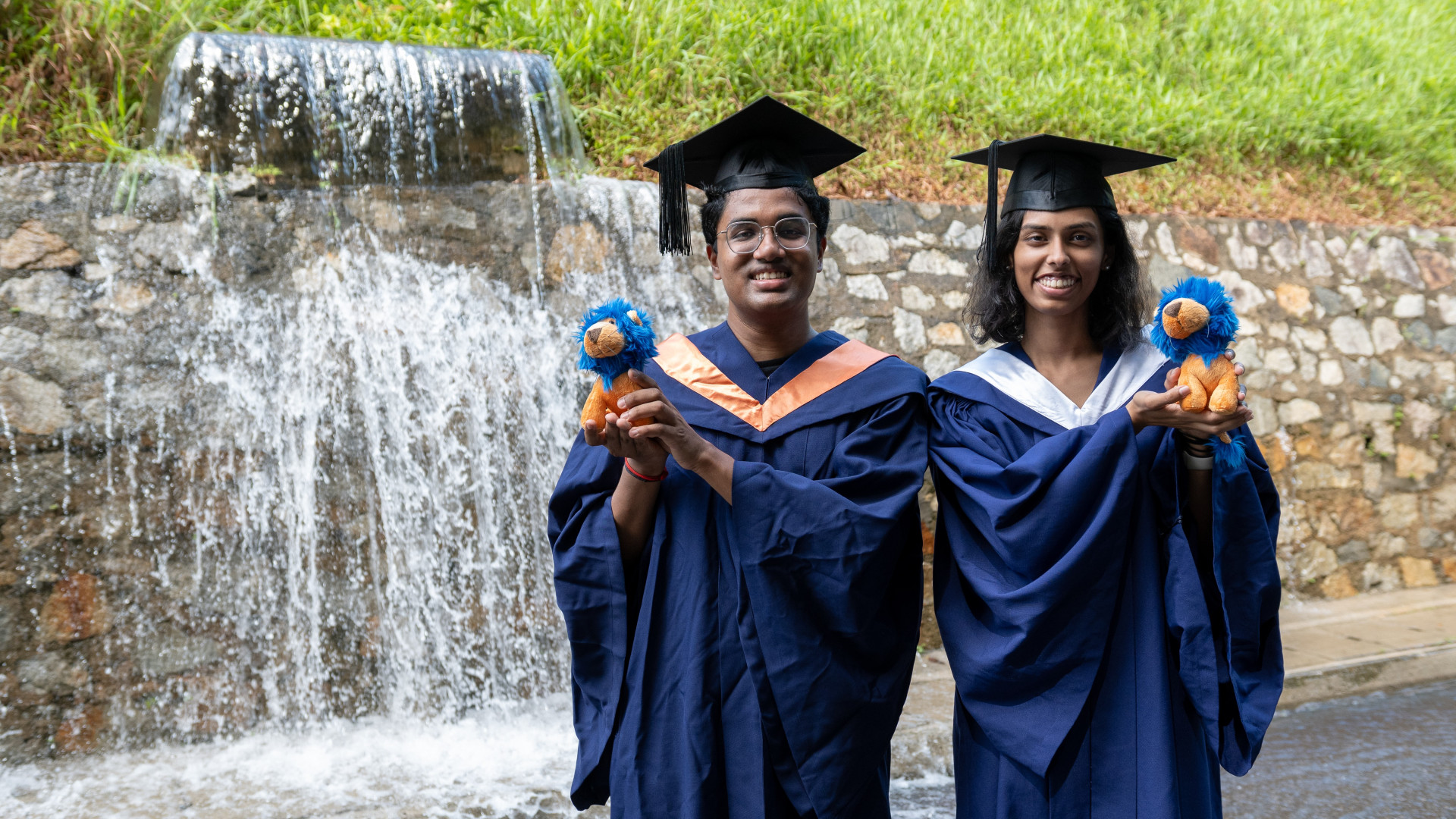 Vishnu Sundaresan (left) and Sindhu Mohan (right) are co-founders of Snowball – an app that aims to be an alternative to social media, making it easy and fun for people to spend their time meaningfully on real-life activities like sports, art, music, reading and more.Sindhu Mohan and Vishnu Sundaresan: Helping people Snowball to the best version of themselves
It started as a chance meeting in New York, then snowballed into something much bigger. In 2023, Sindhu Mohan, 20, and Vishnu Sundaresan, 22, found themselves paired up for a project while attending the
NUS Overseas Colleges (NOC) programme. They had to come up with a tech start-up idea, and their discussions soon revealed a shared frustration – effective time management in an age of endless distractions.
“I had to juggle school, the social media agency I started, and content creation for my personal brand, so I became crazy about optimising my time,” said Sindhu, who graduated on 15 July 2025 with a Bachelor of Business Administration in Innovation and Entrepreneurship from
NUS Business School.
The NOC project, which started as an AI productivity assistant, would later evolve into a social app, Snowball, focusing on helping people specifically with their personal time management. Snowball essentially lets users log any goal, hobby, habit or any activity that they consider a “win”. Users can choose whether to keep each log private, shared with only close friends, or opened to everyone. It takes inspiration from similar apps like Duolingo and Instagram, but with an opposite aim – encouraging users to get off their phones to engage in meaningful activities in the real world, which they can then log in Snowball to share their progress with others.
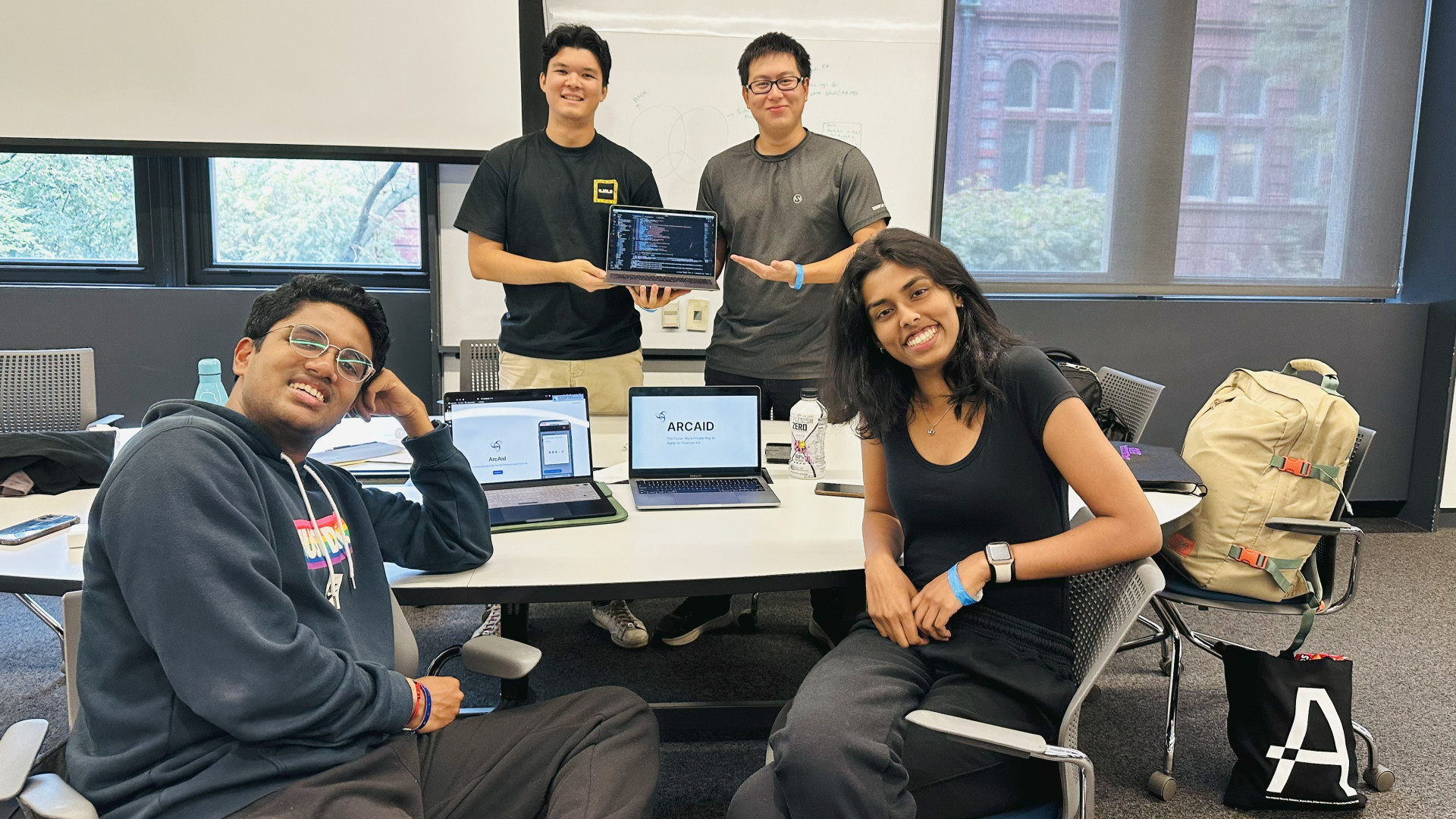 Vishnu (far left) and Sindhu (far right) with their teammates at the PennApps XXIV, the world's first college hackathon, held at the University of Pennsylvania, where the team clinched the top prize.
After returning to Singapore in 2024, the duo secured a S$10,000 grant from the
NUS Venture Initiation Programme. Snowball soft-launched in April 2025 for beta testing and now has over 100 users. After getting their start at
NUS Enterprise's The Hangar, an on-campus incubator, they applied to
The Furnace, an incubator under the
NUS School of Computing's (NUS Computing), for additional office space during the semester.
“We also get access to mentorship at The Furnace and have even been able to hire interns, thanks to NUS Computing,” said Vishnu, who graduated with a Bachelor of Computing in Computer Science with Honours (Distinction) on 12 July 2025. Crediting the internships and core modules he took in school for strengthening his technical skill set, Vishnu noted that he also honed his leadership skills while serving as a Residential Assistant at
Tembusu College.
For Sindhu, staying at
ENterprise House (N-House), an entrepreneurship-themed student residence, introduced her to the world of tech start-ups. Her N-House friends nudged her to apply to NOC. A pivotal year being immersed in the New York City start-up ecosystem made her decide to pursue launching a tech start-up instead of continuing with the marketing agency she was already familiar with running.
Snowball is now targeting a market launch on 14 July. The co-founders have also set their sights on bringing the app to the United States, where inspiration for the app first took shape.
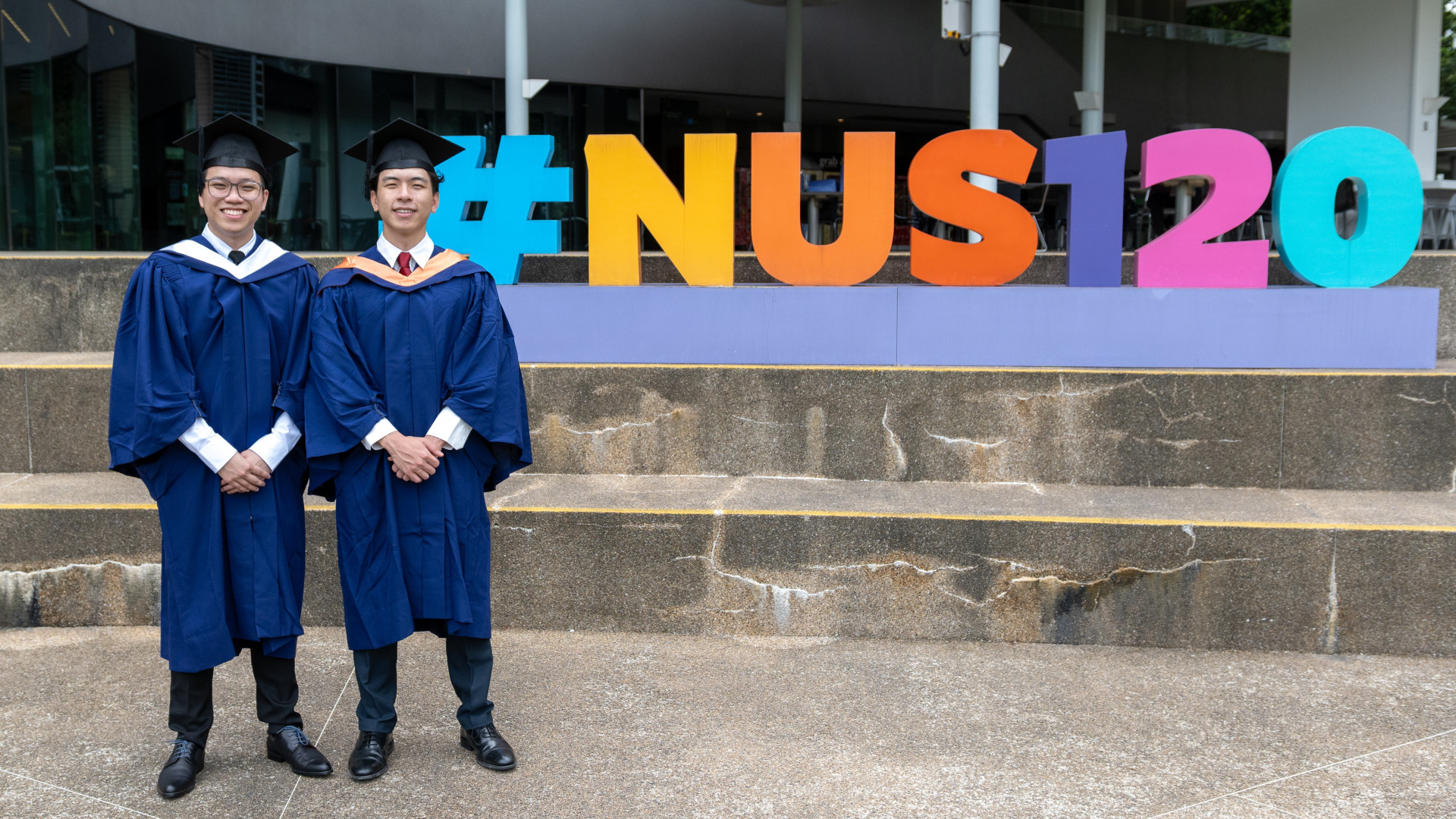 Co-founders, Andre Lim (left) and Jed Ng (right), developed Check, an AI-powered agent to provide students with hyper-personalised tutoring.Andre Lim and Jed Ng: Empowering students through AI-powered education
Sitting in a corner of University Town’s Starbucks, two young men – Andre Lim and Jed Ng – scrutinised lines of computer code. They were building something that could change the way students learn.
Such evenings were common for the co-founders of Check, an artificial intelligence (AI)-powered agent which provides hyper-personalised help for students from secondary school to junior college. Launched in April 2025, the first-of-its-kind tutoring experience takes in queries from students and responds with curriculum-specific help.
Check was born out of Andre’s passion to help students learn better, having founded Singapore’s largest tutoring YouTube channel and a tuition centre. Some of his students, he recounted, hated studying geography but changed their minds after lessons with him, and are even pursuing the subject now.
To better cater to each student, Andre reimagined learning as a hyper-personalised experience powered by AI. But the
NUS Business School graduate, now 25, knew he needed tech expertise to bring his idea to life. Andre coincidentally reconnected with Jed via LinkedIn, a peer from
NUS Computing who had also attended the same secondary school. “I had always been drawn to start-ups over traditional corporate internships, so I started Check with Andre as a side project during my internship, to prototype ideas and explore possibilities,” Jed recalled, and what began as a side project soon evolved into a start-up.
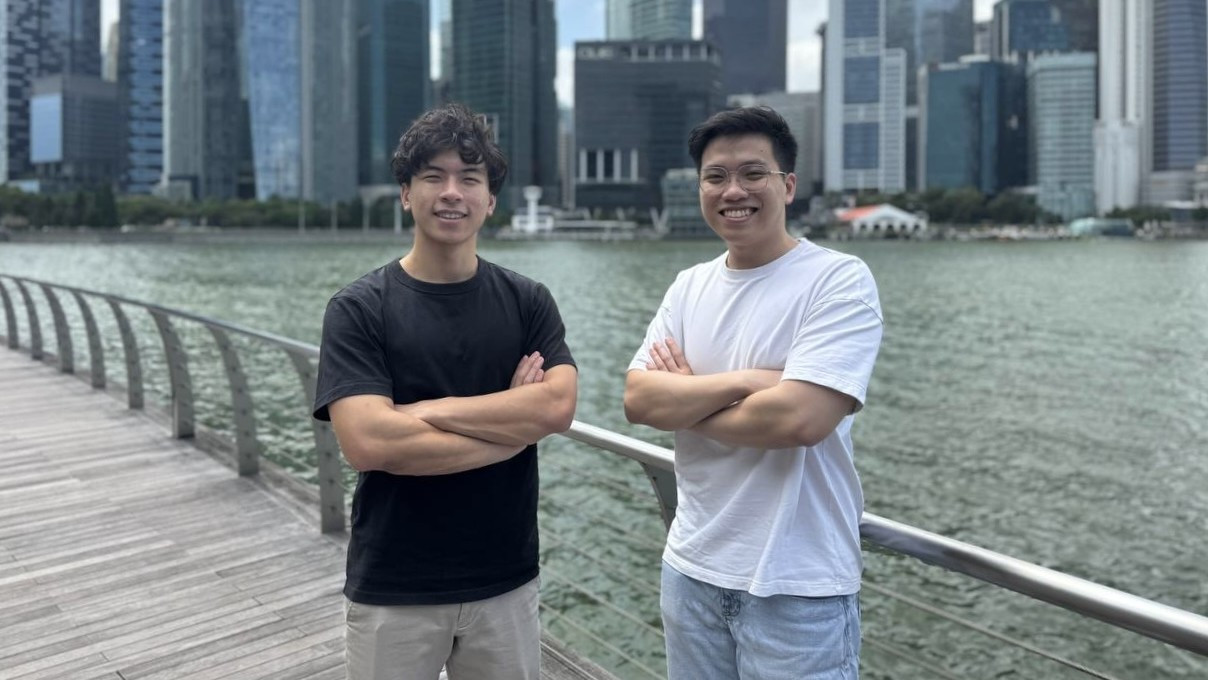 Like any start-up, Jed (left) and Andre (right) faced their fair share of challenges. Learning to navigate their differences, forge a shared vision and grow as co-founders was a steep learning curve, but those challenges ultimately forged a stronger bond between them.
Despite not having a computing background, Andre was no stranger to AI. During his
field service project (FSP) in his final year, he worked with a healthtech company to launch an AI chatbot for doctors, giving him valuable experience and the idea to start an AI business. “NUS equips us well with theoretical knowledge, and ending the course with an FSP was a great way to apply what we had learned in a real-world setting,” said Andre.
Going on overseas exchanges — from attending a conference at the Harvard College in Asia Program to a semester-long Student Exchange Programme in Norway — also gave Andre valuable insights into diverse education systems, which would be handy when Check goes global.
For Jed, his computer science modules armed him with foundational knowledge. “For instance, the software engineering modules were instrumental in teaching me some of the best practices,” he said.
Besides initial funding from Iterative, a start-up accelerator focused on ventures in Southeast Asia, Check has also drawn the interest of some 30 local and overseas investors. Since its launch, the platform has gained over 200 users, with the majority of them being junior college students. “Our goal is to make private tuition accessible at scale,” said Andre.
Andre graduated on 15 July 2025 with a Bachelor of Business Administration in Finance, Innovation and Entrepreneurship with Honours (Distinction), while Jed graduated on 12 July 2025 with a Bachelor of Computing in Computer Science with Honours.
 Xie Qihuang, pictured at the NUS Pharmacy Practice Skills Hub, conceptualised Hesyra as a healthtech project dedicated to helping healthcare providers improve patient care through effective tech-enabled solutions.Xie Qihuang: From pills to pixels – bridging the gap between patient care and technology
Xie Qihuang’s friends and relatives told him that taking a gap year would derail his carefully planned career. They were worried about adding another year to his already lengthy journey, which included a four-year scholarship bond. But Qihuang, a 26-year-old
NUS Pharmacy graduate, took a leap of faith and used the time to participate in the
NUS Overseas Colleges (NOC) programme. That decision would sow the seeds for Hesyra, his ambitious healthtech project aimed at helping to digitalise mundane administrative tasks so that healthcare providers can focus on patient care.
To broaden his worldview, Qihuang opted for the year-long NOC programme in Sweden, driven by two key factors: its thriving health-tech scene and its unique 'lagom' culture, a Swedish word which embodies their philosophy of balance and moderation in all aspects of life. He wanted to learn from one of the leading healthcare innovation hubs in Europe while also being exposed to a more balanced life philosophy, a stark contrast to his experience in Singapore. This journey of discovery included studying Entrepreneurial Studies at the KTH Royal Institute of Technology and interning at a health-tech firm, Encare.
As a product management intern at Encare, Qihuang helped design a feature that enabled hospitals to benchmark surgical outcomes using metrics that were not only technically feasible but, more importantly, clinically meaningful. The experience proved transformative. “Technologists may spot inefficiencies, but clinicians understand the reasons behind them, which are often rooted in patient safety or care continuity. These experiences taught me to bridge both worlds, translating the nuanced needs of healthcare professionals and patients into the language of data analysts and engineers,” he said.
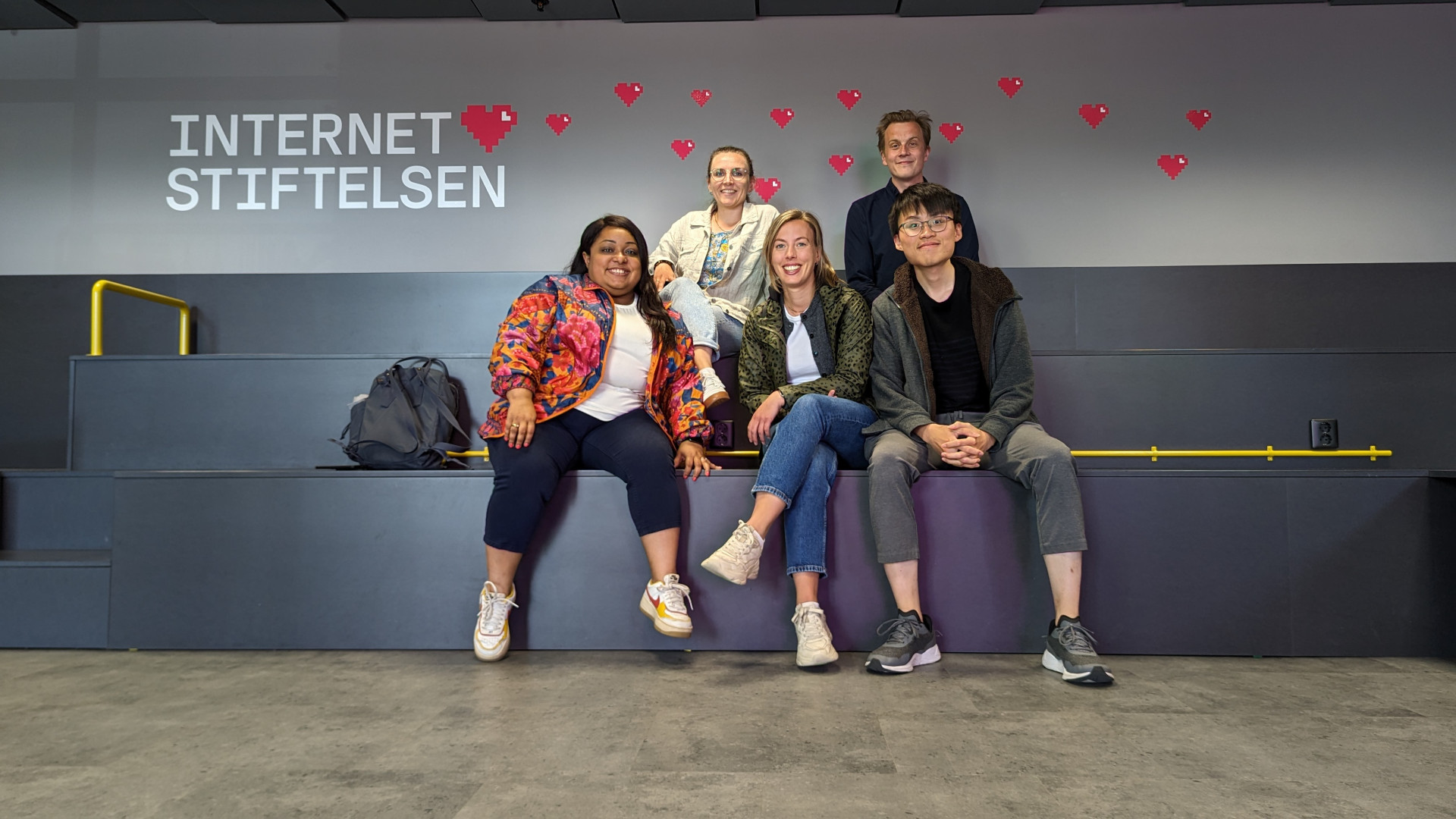 Qihuang (first row, far right), seen here with his teammates from health-tech firm Encare in Sweden, where he spent time as a product management intern.
The pieces came together during an NOC module, when Qihuang revisited an
NUS MedTech Society project with the Singapore Cancer Society — a chatbot to help cancer patients access critical information. The experience had also exposed him to the reality of patients struggling to have all their questions answered within limited consultation time. When he returned to Singapore, he decided to build on these inspirations and set up Hesyra in April 2024. The name Hesyra combines the "He–" syllable, symbolising
health and
healing, with the "–syr" syllable, which is a blend between a
system and sc
ribe – reflecting Qihuang’s vision of supporting clinicians with tools that allow them to truly hear and be present in the conversation with their patients.
While not a registered company yet, Hesyra’s first product — an ambient transcription tool that transcribes doctor-patient conversations and generates comprehensive notes — is being tested in private clinics ahead of its launch on 31 July 2025. The solution removes the need for notetaking, allowing doctors to give more time and attention to patients, maximising consultations for them.
“My supervisor in Sweden once told me that there are a thousand things I can do, but only a few that will move the needle. For me, moving the needle means combining clinical experience with an entrepreneurial mindset. I aim to start on the frontlines of pharmacy, understanding the challenges my colleagues and patients face, and use that first-hand experience to build technology that truly serves them,” said Qihuang.
Qihuang will be graduating today, 17 July 2025, with a Bachelor of Pharmacy with Honours (Highest Distinction). Even as he embarks on his pharmacy career in a public hospital after Commencement, he remains focused on his long-term vision of innovating within the healthcare space. He is dedicated to scaling Hesyra in his own time, transforming his frontline experience into practical, tech-enabled solutions that improve the lives of patients and the workflows of clinicians.
This story is part of NUS News’ coverage of Commencement 2025, which celebrates the achievements of our graduates from the Class of 2025. For more on Commencement, read our stories and graduate profiles, check out the official Commencement website, or look up and tag #NUS2025 on our social media channels!News from:
https://news.nus.edu.sg/innovation-for-impact-nus-grads-launch-tech-start-ups/


 2025-08-01